
Start with the cup you want
There is no best brew method, only the one that fits the cup you want right now. Decide what matters most: clarity, body, speed, or a bigger batch. The method follows from that answer.
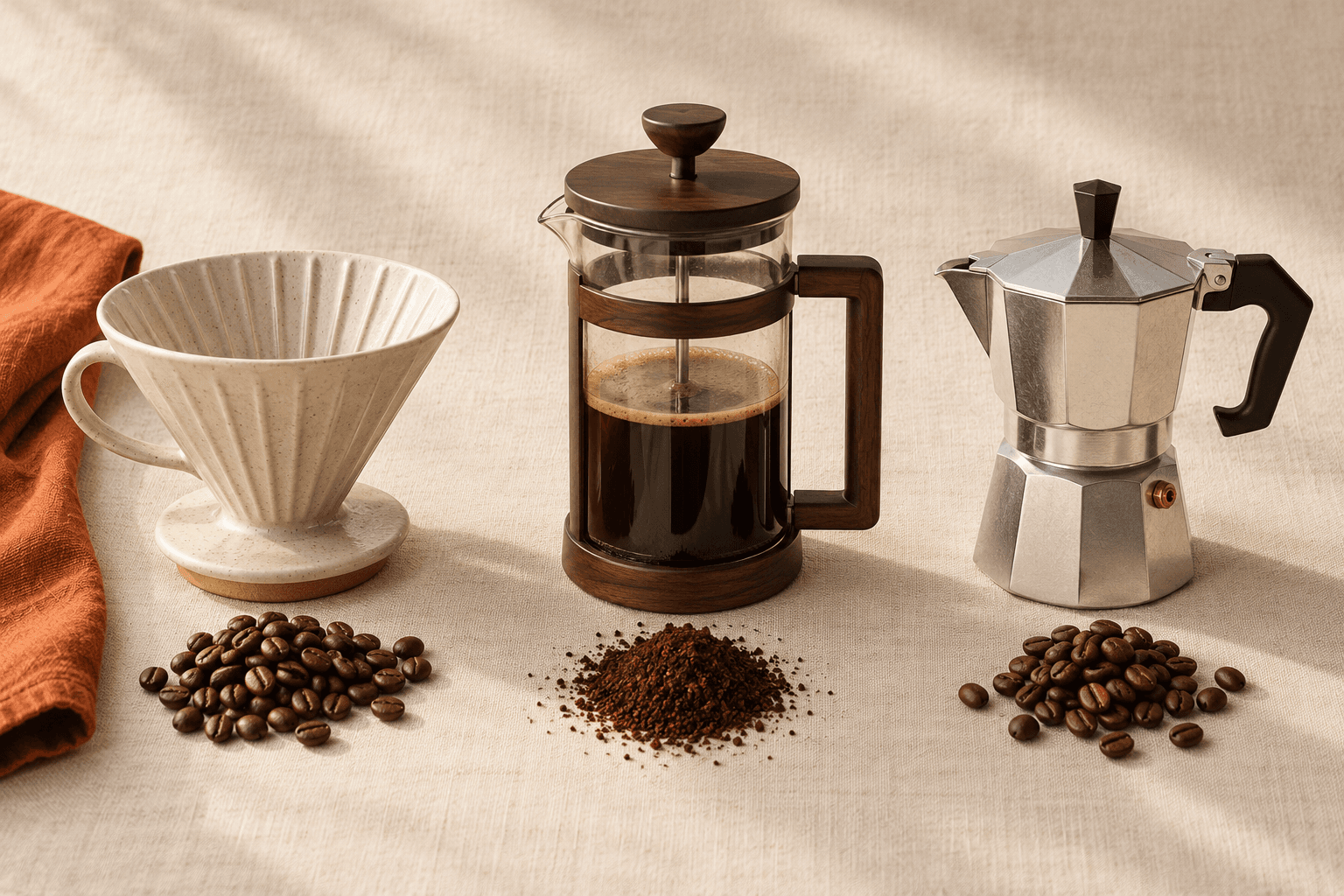
For clarity and brightness
Pour-over brewers highlight acidity and delicate aromatics. They reward a steady pour and a little attention, but they are easy to repeat once you have a recipe.
Paper filters trap most coffee oils and fine particles, which is why these cups taste clean and light-bodied.
For body and simplicity
Immersion methods such as the French press or AeroPress give you more body and tolerate small changes. They are a good choice when you want a forgiving daily cup.
Metal filters and a press let more oils through, so the coffee feels heavier and rounder in the mouth.
For a fast, concentrated cup
Espresso uses pressure to make a small, intense drink. It takes more dialling in, so a good journal is especially useful for remembering what worked.
A moka pot is a simpler stovetop option. It makes a strong, heavy coffee that works well with milk, though it is less concentrated than espresso and harder to fine-tune.
Compare the methods side by side
Use these as starting points. Every coffee and grinder is a little different, so adjust the first recipe by taste.
| Method | Cup character | Ratio (coffee : water) | Grind | Time |
|---|---|---|---|---|
| V60 pour-over | Clean, bright, aromatic | 1:16 | Medium-fine | 2:30 to 3:30 |
| Chemex | Very clean, light body | 1:15 | Medium-coarse | 4:00 to 5:00 |
| French press | Full body, rich | 1:15 | Coarse | About 4:00 |
| AeroPress | Smooth, flexible | 1:14 | Medium-fine | 1:30 to 2:00 |
| Cold brew concentrate | Sweet, low acidity | 1:6 | Coarse | 12 to 18 hours |
| Espresso | Intense, syrupy | 1:2 | Fine | 25 to 30 seconds |
Try it: method planner
Plan a starting recipe for any method
Coffee
18.8 g
Ratio
1:16
- Water temperature: 94 to 96 °C
- Grind: Medium-fine
- Brew time: 2:30 to 3:30
- Bloom with about 38 ml of water for 30 to 45 seconds first
Match the method to your morning
Think about the time and attention you really have, not the ideal morning you picture.
- Five minutes and half asleep: French press or AeroPress.
- A calm single cup and you enjoy the ritual: pour-over.
- Several cups for guests: Chemex or a batch brewer.
- Prepare ahead for the week: cold brew concentrate.
- Milk drinks: espresso, or a strong AeroPress concentrate.
Match the method to the bean
A delicate, fruity light roast usually shines through a paper filter, where its aromatics stay clear. A chocolatey, nutty medium or dark roast is often happier in an immersion brew or as espresso, where body and sweetness come forward.
Treat this as a rule of thumb rather than a rule. The best way to learn what a bean likes is to brew it two ways and compare the notes you wrote down.
Equipment worth buying first
A modest brewer with good habits beats an expensive brewer used casually. If you are spending money, spend it in this order.
- A scale that reads to 0.1 g, so your recipes are repeatable.
- A burr grinder. Grind consistency changes the cup more than the brewer does.
- A kettle, ideally with a narrow spout if you plan to brew pour-over.
- Filtered water with a moderate mineral content, rather than distilled or very hard water.