
Put consistency first
If you upgrade one thing, make it the grinder. A grinder that produces a fairly even range of particle sizes extracts more evenly, so the cup is sweeter and each adjustment is easier to read.
Blade grinders chop beans unevenly into dust and chunks at the same time, which makes a cup both sour and bitter. Any burr grinder, which crushes beans between two cutting surfaces, is a clear step up.
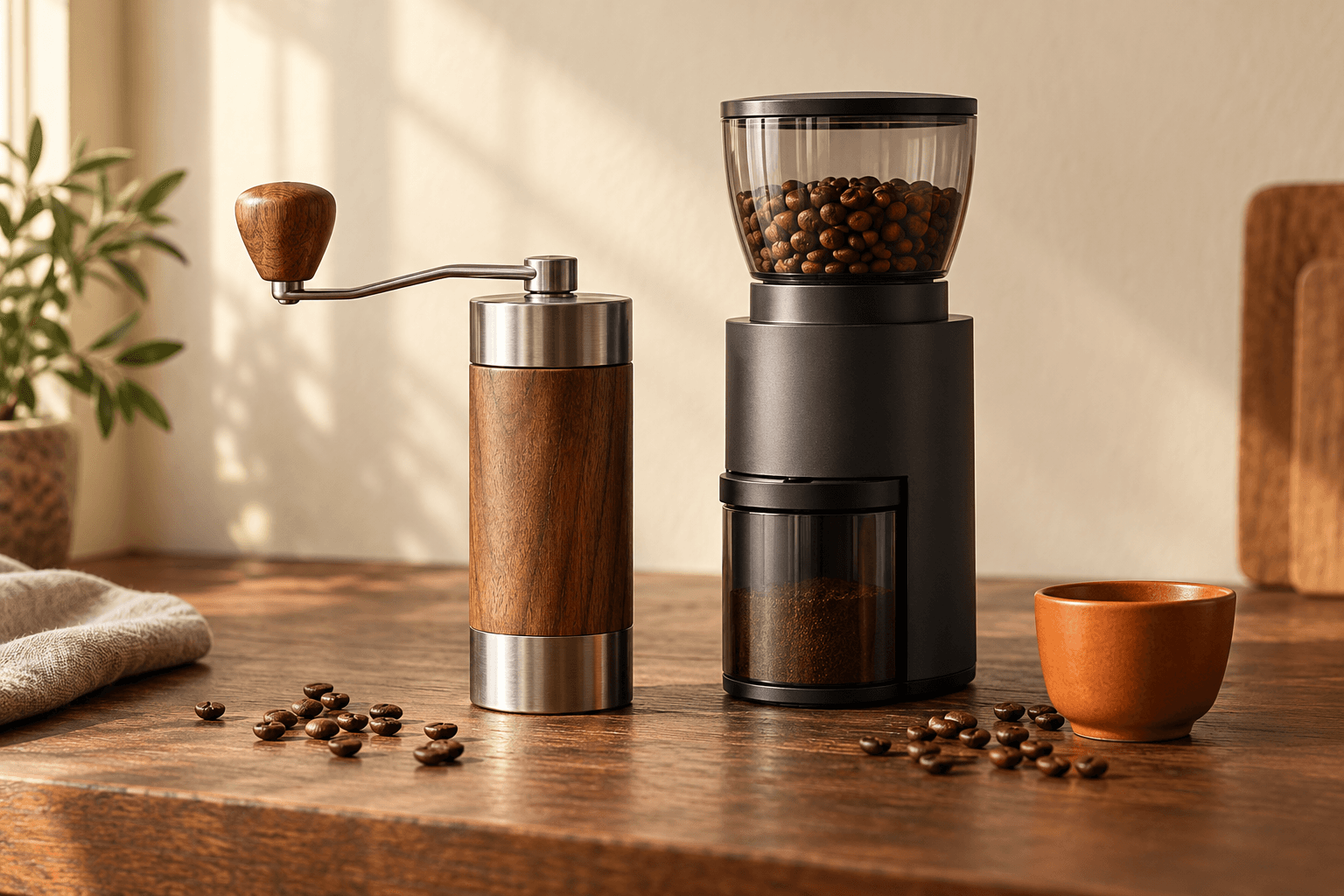
Hand or electric
A hand grinder can give excellent results for one or two cups and usually costs less than an electric grinder of the same quality. It is quiet and travels well, but grinding for espresso or for several cups every morning takes real effort.
An electric grinder saves time when you brew several cups or make espresso every day. Expect to spend more for the same grind quality, because a motor and housing add cost.
Match the grinder to your main method
Espresso asks for very small, repeatable changes because a tiny difference can move a shot from fast to slow. Filter coffee asks for a broad range and an even grind. If you brew both, choose a grinder that can move between them and back without losing your reference point.
Adjustment comes in two styles. Stepped grinders click between fixed settings, which makes a setting easy to repeat. Stepless grinders turn continuously, which allows very fine espresso changes but needs a mark or number to return to.
| If you mostly brew | Look for |
|---|---|
| Espresso | Fine adjustment, low retention, easy repeatability |
| Pour-over | Even particles, broad range, simple cleaning |
| Several cups | Speed, quiet operation, and a hopper or dosing workflow |
| Travel | Durable hand grinder with a catch cup that fits your brewer |
Burrs, retention, and workflow
Burr shape and alignment affect how evenly the grinder breaks beans. Conical and flat burrs can both make great coffee, so a well-built grinder of either type matters more than the burr shape.
Retention is the coffee that stays inside the grinder after each dose. Old grounds then mix into the next dose, which adds stale flavour and makes switching beans slow. Low retention matters most if you weigh single doses or change coffees often.
Keep the choice practical
Noise, speed, cleaning, and counter space decide whether you enjoy using the grinder every day. A slightly less capable grinder that you are happy to use beats a better one that wakes the house or takes ten minutes to clean.
A buying checklist
Before buying, check that replacement burrs and parts are available, the adjustment covers your method, and the catch cup or portafilter fits your setup. Reviews help with noise and workflow, but your own coffee matters more than a specification sheet.
Add the new grinder to a Roastbook gear set before your first brew. Its setting then travels with every recipe, so a number like “12” keeps its meaning.
- Can you return to a setting after cleaning?
- Can you change coffee without much old coffee left inside?
- Does the workflow suit the number of cups you make?
- Will you still use it six months from now?