
Buy the amount you can use
Freshness is easiest to manage when an open bag is finished within about a month. A smaller bag you finish while it tastes lively is often better value than a large bargain bag that sits open for months.
Work out how long a bag lasts before you buy. Divide the bag weight by the coffee you use per brew, then by the number of brews per day.
Try it: bag life
How long will this bag last?
Lasts about
16 days
You will finish the bag within about a month, while it should still taste lively.
What damages flavour
Heat speeds up staling, light damages aroma, oxygen dulls flavour, and moisture changes the beans and can cause condensation. Keep the container closed and open it only long enough to dose.
Coffee also absorbs smells, so keep it away from spices and strong food.
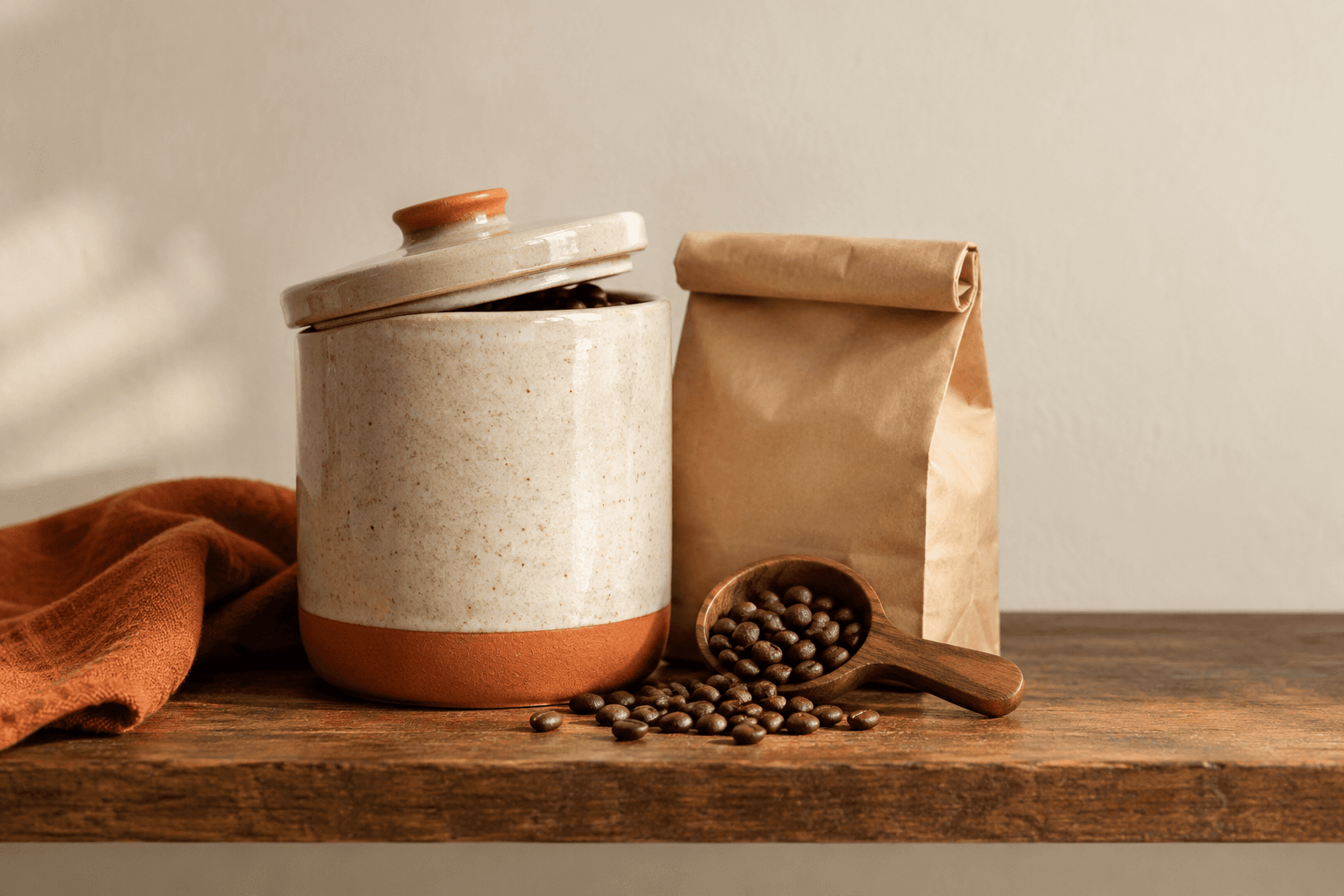
Use an airtight, opaque container
Keep beans in a clean container with a good seal, away from the stove and direct sun. A good resealable bag with a one-way valve works well too, as long as you press the air out and close it every time.
Do not pour new beans into a container that still has old oils or crumbs. Clean and dry it first so the new coffee starts with a neutral surface.
Let fresh coffee settle
Freshly roasted coffee releases carbon dioxide. Espresso can run foamy and uneven during the first days, while filter coffee may taste sharp or muted. Many coffees settle after a few days for filter and one to three weeks for espresso.
The useful resting period varies by roast and coffee. Record the roast date and the date of your first satisfying brew instead of treating one number as a rule.
Freezing can work
Freeze beans in small airtight portions of a few days’ worth each if you need to keep them for longer. Take out only what you need and let a sealed portion reach room temperature before opening it so condensation does not land on the beans.
Avoid the fridge. It is humid and full of food smells, and repeated temperature changes cause condensation.
Know when storage is the problem
If coffee becomes flat, papery, or unusually bitter while your water and gear are clean, storage is a likely cause. A storage problem dulls aroma and sweetness across every method, while a grind problem usually changes extraction in one method first.
- Smell the beans before grinding: stale beans smell faint or like cardboard.
- Compare a frozen or freshly opened portion with the open container.
- Write down the date you opened the bag.
- Keep the same recipe for the comparison.
Track roast date and first opening
Roastbook keeps the roast date and bag history with your brews. When a coffee starts to fade, you can see how old it was and whether the recipe changed at the same time.