
Clean the parts that touch coffee
If a familiar coffee suddenly tastes stale or bitter, clean before you change the recipe. Coffee oils build up on brewers, carafes, and baskets, and old oils turn rancid and make fresh coffee taste stale.
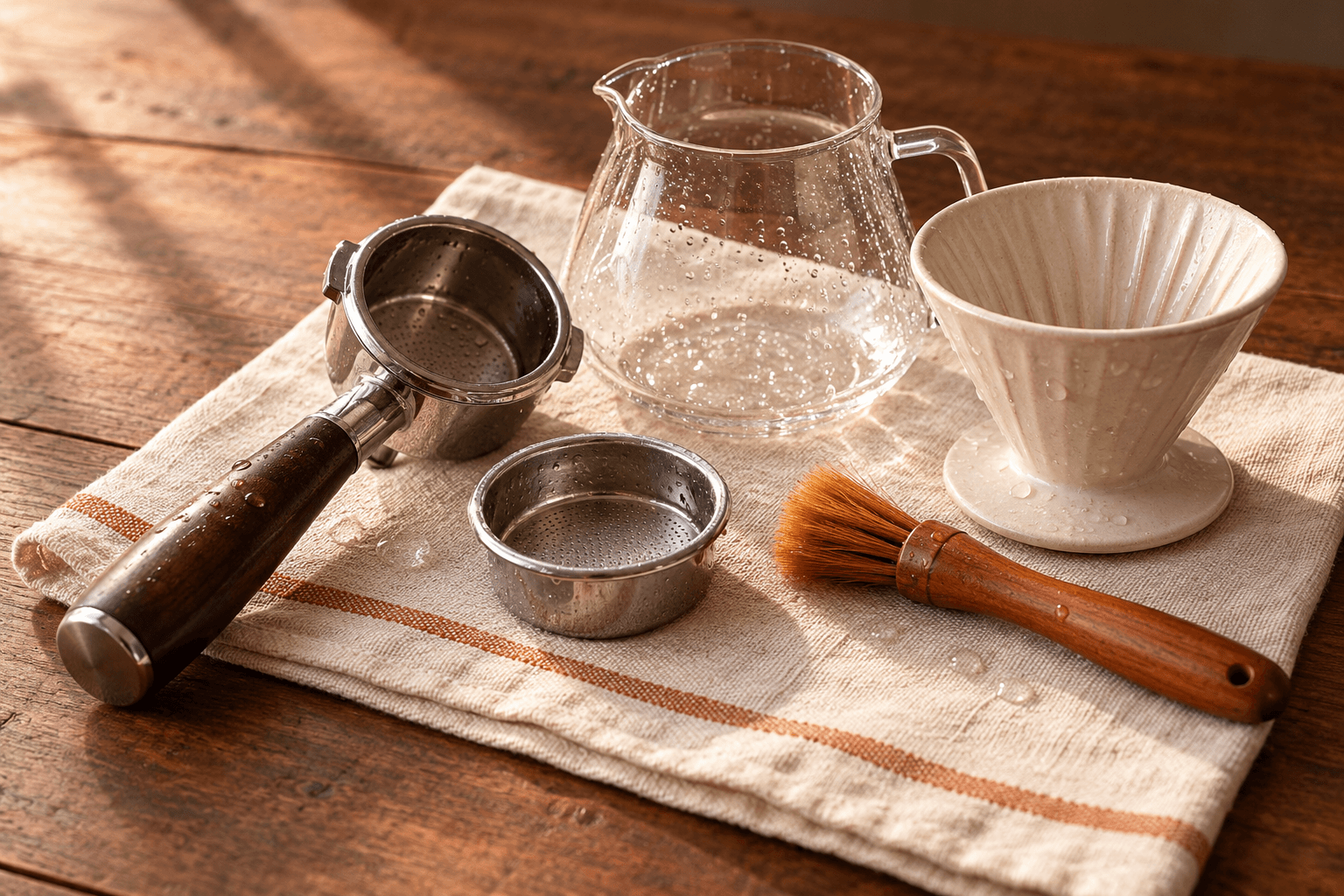
Rinse the brewer after each use, empty the filter, and wash removable parts with warm water and a little unscented detergent. Rinse well so no soap taste is left behind.
A useful cleaning rhythm
A short routine is easier to keep than a rare deep clean. Adjust it to how often you brew and how hard your water is.
| Equipment | Everyday | Every week or two | Less often |
|---|---|---|---|
| Filter brewer and carafe | Rinse after use | Wash with detergent | Soak in a coffee cleaner if stained |
| Grinder | Brush out loose grounds | Brush burrs and chute | Follow the maker’s deep-clean steps |
| Espresso machine | Flush group head, purge and wipe the steam wand | Backflush if your machine supports it | Descale on the maker’s schedule |
| Kettle | Empty after use | Check for scale | Descale when scale appears |
Brush the grinder
Brush the burr chamber and chute when you change coffees or notice stale flavours. Unplug an electric grinder first. Follow the maker’s instructions before using cleaning pellets or taking parts apart, and photograph the arrangement of any part you remove so it goes back correctly.
Remove mineral scale
Kettles and espresso machines collect scale faster with hard water. Scale slows heating, changes temperature, and can block small pipes inside an espresso machine. Use the manufacturer’s descaling product and process, then rinse completely before brewing.
Clean without damaging the gear
Use the cleaner and concentration recommended for the equipment. Do not use abrasive pads on coated surfaces, soak electrical parts, or run a chemical cleaner without the required rinse cycles.
Taste after cleaning
The first brew after a deep clean may taste different because old oils are gone or a rinse was incomplete. Run a plain water cycle where appropriate, then brew a familiar coffee and compare it with your saved note.
Add the cleaning date to the gear in Roastbook. If the familiar coffee tastes clearer, your history will show the clean as the reason rather than the recipe.