
Taste as the cup cools
Coffee changes as it cools. Smell it first, take a small sip, and taste again after five and ten minutes so one hot impression does not decide the whole note. Many coffees taste sweeter and more detailed when warm rather than hot, and flaws such as sourness also become clearer.
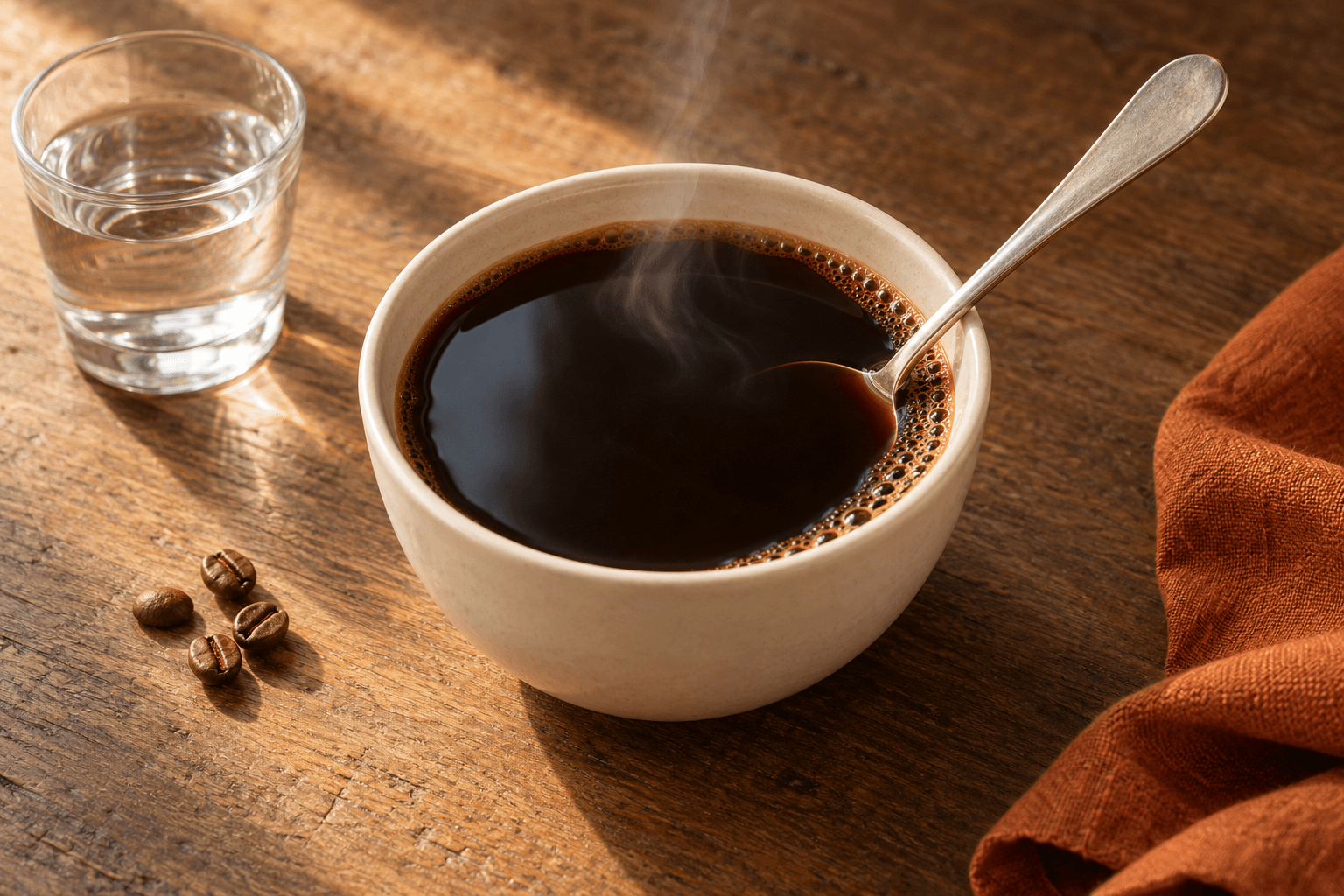
Use five simple prompts
Notice aroma, sweetness, acidity, body, and finish. Acidity is the bright, juicy quality, not sourness. Body is how heavy the coffee feels in your mouth. Finish is what stays after you swallow.
“Brown sugar sweetness, lemon acidity, light body” is enough to compare two cups. You do not need a formal vocabulary.
Use a small vocabulary
Start with broad words: sweet, bright, heavy, clean, dry, bitter, flat, or fruity. Add a specific comparison only when it helps, such as “lemon-like acidity” or “cocoa finish.” You are building a useful record, not passing an exam.
Separate strength from flavour
A strong coffee can be sweet and balanced, or strong and bitter. A weak coffee can be clean, or weak and sour. Use the dose and water ratio to change strength, then use grind, time, temperature, and agitation to change extraction.
Name the strongest signal
Choose one clear phrase instead of listing every flavour you can imagine. The strongest signal also tells you what to change next.
Try it: taste check
What does the cup taste like?
Try a finer grind or a longer brew to extract more.
Hotter water also helps.
Taste two cups together
Side-by-side tasting makes differences easier to notice. Keep the cups the same size, brew them close together, and taste them at the same temperatures. Write one sentence for each before deciding which you prefer.
Score only if the scale means something
A small personal scale works when the ends are defined. For example, 1 means you poured it away and 5 means you want the same recipe again. Save the score with the tasting note in Roastbook, so a number always has a sentence beside it.