
Choose the question first
Are you comparing origin, process, roast, or value? Write the question down before brewing. It stops a dramatic first impression from turning into a vague conclusion.
Use beans with similar roast dates when possible. If one coffee is much older, age becomes part of the experiment.
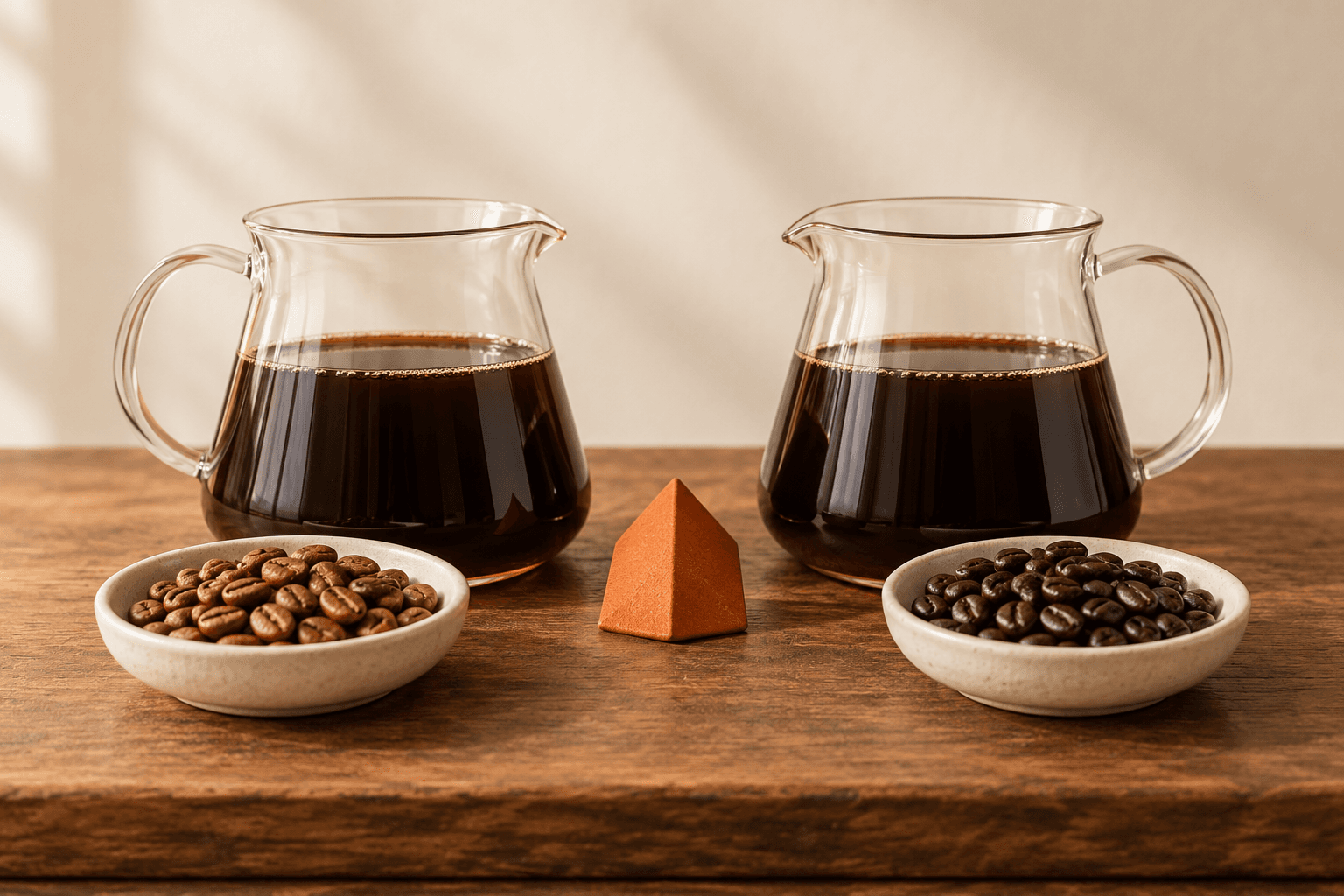
Hold the method steady
Use the same brewer, grinder setting, water, dose, ratio, temperature, and time for both coffees. Change the bean only. A small batch such as 15 g of coffee and 250 g of water each keeps the test quick and cheap.
Try it: brew ratio
See how strong your recipe really is
Ratio
1:16
Coffee share
5.9 %
Closest common recipe: V60 pour-over at 1:16.
Keep the variables equal
Grind each coffee immediately before brewing and use the same pour or steep routine. If the first brew shows one coffee clearly needs a different recipe, record that as a second experiment instead of changing both at once.
Label the cups underneath, or ask someone to shuffle them, if you want to taste without knowing which is which.
Brew side by side
Brew close together and taste both as they cool, switching between the cups. Write the first clear differences before you read the roaster descriptions again.
Compare the same signals
Use aroma, sweetness, acidity, body, finish, and whether you want to drink it again. Asking the same questions of both cups keeps the comparison fair.
| Question | Useful note |
|---|---|
| Which is sweeter? | Name the sweetness and when it appears |
| Which is clearer? | Describe the finish and aftertaste |
| Which would you buy? | Say when and how you would brew it |
| What changed? | Record any recipe or gear difference |
Write the result you can use
Record the difference in plain language: “Coffee A was brighter and lighter; Coffee B was sweeter with more body.” Add which one you would brew tomorrow and why.
Log both brews from the same Roastbook gear set. The comparison then stays in your history, where you can filter it by bean, method, rating, or gear later.