
Start with a simple recipe
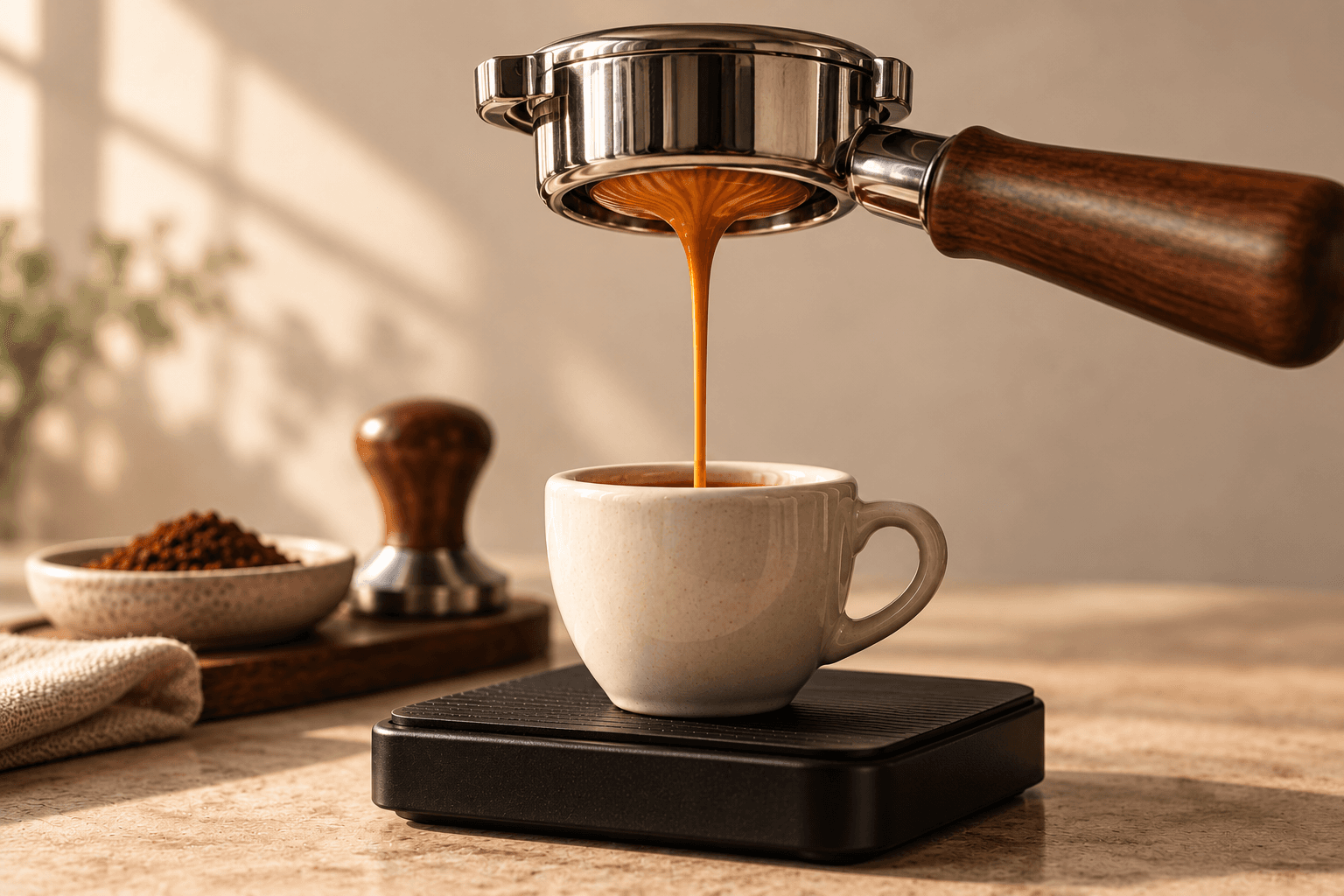
Use the coffee dose as your anchor. A 1:2 ratio is a useful first target: 18 grams in, about 36 grams out. Keep the dose and yield steady while you adjust grind.
Weigh both the coffee going in and the espresso coming out. Volume is misleading because crema changes how much liquid a cup appears to hold, while weight stays honest.
- Dose: the basket size, usually 17 to 20 g
- Yield: twice the dose to start
- Time: about 25 to 30 seconds as a first guess
- Water temperature: 92 to 94 °C if your machine lets you set it
Try it: espresso ratio
Set your dose, see your target yield
Start with 36 g out, then let taste decide.
Prepare the puck the same way every time
A shot can only be as consistent as the puck it runs through. Most dial-in frustration comes from a puck that changes from one attempt to the next, which makes every adjustment impossible to read.
- Weigh the dose to the nearest 0.1 g.
- Break up clumps and level the grounds, for example with a thin needle tool.
- Tamp level with steady pressure. Consistency matters more than force.
- Wipe the rim, lock in the portafilter, and start the shot straight away.
Change one variable
If the shot runs quickly and tastes sharp or thin, grind finer. If it drips slowly and tastes dry or bitter, grind coarser. Make small changes and write down what happened.
Grind size is your main lever. Dose and yield are recipe choices you set first and then leave alone, so that a change in the cup can be traced back to the grind.
Read the shot, not just the clock
Start the timer when the pump starts. The first drops usually appear after 6 to 10 seconds, then the stream thickens into a steady, syrupy flow. Stop at your target yield rather than at a fixed time.
Time is a diagnostic rather than a goal. A shot that finishes in 15 seconds is almost certainly too coarse, and one that takes 45 seconds is almost certainly too fine. Anything in between is judged by taste.
Try it: shot checker
Is the shot running in the usual window?
Ratio
1:2
Flow
1.3 g/s
The time is in the usual window, so taste decides. Only change the grind if the cup is off.
Adjust by taste
Taste the shot as soon as it has cooled slightly and compare it with the table below. Change one thing, pull another shot, and taste again.
| The shot tastes | Likely cause | Next change |
|---|---|---|
| Sour, sharp, or thin | Under-extracted | Grind finer, or let the shot run to a slightly higher yield |
| Bitter, dry, or ashy | Over-extracted | Grind coarser, or stop at a slightly lower yield |
| Watery and weak | Too little coffee for the water | Raise the dose or shorten the yield |
| Sweet but too intense | Balanced, but concentrated | Lengthen the ratio a little, for example 1:2.3 |
Adjust for roast and age
Lighter roasts are dense and resist extraction, so they often taste best with a finer grind, hotter water, and a longer ratio such as 1:2.5 or more. Darker roasts extract easily, so a shorter ratio such as 1:1.5 to 1:2 and slightly cooler water usually keeps them from turning bitter.
Very fresh beans still release a lot of carbon dioxide, which can make shots foamy and erratic during the first days after roasting. Many beans settle into a more predictable range after one to three weeks. Note the roast date so you can tell a bad grind from a bean that needs more rest.
Spot channeling
Channeling happens when water finds a fast path through the puck and leaves the rest under-extracted. The result tastes both sour and bitter at once, which is a sign the problem is the puck and not the grind setting.
- Fine streams or spurts shooting out of the basket
- Pale, blonde patches on the stream early in the shot
- Uneven dripping from one side of a bottomless portafilter
- Fix it with better distribution, a level tamp, and a dose that suits the basket.
Taste before chasing a number
Time helps you compare attempts, but flavour decides whether the recipe works. Once the cup tastes sweet and clear, save the recipe in Roastbook so the next brew starts closer.
Beans change as they age and grinders drift, so expect to nudge the grind again within a week or two. A saved recipe gives you a starting point instead of a blank slate.