
Start with filtered water
A cup of filter coffee is about 98 percent water, so use water that tastes good on its own. A simple charcoal filter jug is a useful first step because it removes chlorine and some off flavours without stripping every mineral out.
- Avoid distilled water for everyday brewing: it tastes flat and extracts unevenly.
- Very hard water can taste chalky and mute acidity.
- If your tap water smells of chlorine, filter it before you change your recipe.
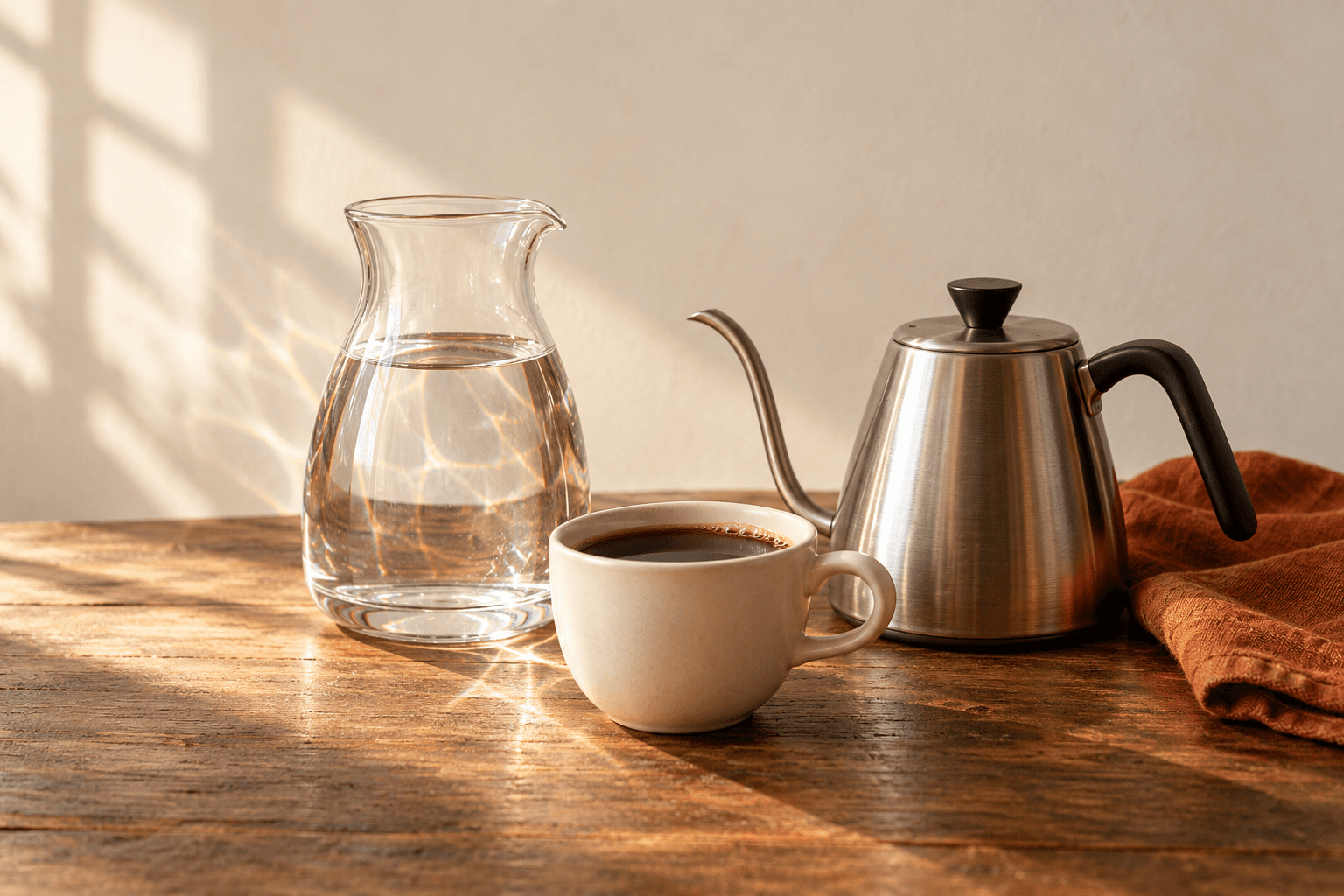
A simple water check
Fill two glasses, one with your brewing water and one with a familiar bottled water. Smell both, then taste them at room temperature. If one has a chlorine, metallic, salty, or chalky flavour, it will show up in the coffee too.
You do not need a laboratory report to find a first improvement. Start with water that tastes clean, then change only the water while keeping your recipe fixed.
Minerals carry flavour
Hardness describes how much calcium and magnesium the water carries. Those minerals help water pull flavour out of the grounds. Too little can make a cup taste thin and hollow, while too much can make it dull or rough.
Alkalinity, sometimes listed as bicarbonate, works differently: it neutralises acids. A little keeps coffee from tasting sharp, but a lot makes even a bright, fruity coffee taste flat. Bottle labels list both, so treat them as clues rather than targets.
When water is too soft or too hard
Very soft water can make coffee taste hollow because it carries too few minerals to extract well. Very hard water can flatten delicate flavours and leaves limescale in kettles and espresso machines, which is worth avoiding for the machine’s sake alone.
If your coffee tastes dull across several different beans, the water is a likely cause. Try a moderate filtered or bottled water before you change grind, temperature, and ratio together.
| The cup tastes | Water to try next |
|---|---|
| Thin, hollow, or sharp | A water with a little more mineral content |
| Dull, flat, or chalky | Filtered water, or a softer bottled water |
| Chlorine or swimming pool | A charcoal filter |
Use a temperature you can repeat
Most filter coffee brews well somewhere between 92 and 96 °C. Dark roasts often prefer the cooler end because they extract easily, while dense light roasts may need more heat to taste sweet.
Without a temperature-controlled kettle, boil the water and let it rest for about 30 seconds. That lands roughly in the right range, and doing it the same way every time matters more than the exact number.
Record the water with the recipe
If the same recipe tastes flat with one water and lively with another, keep the recipe and record the water as part of the brew. A water change can move the cup as much as a grind change, so leaving it out makes old brews hard to compare.
In Roastbook, note the filter, bottle, or mineral mix beside the dose, gear, and tasting note. When a coffee suddenly tastes different, your history will show whether the water changed too.