
Choose by the flavour you want
If you want to try a different roast level, buy a small bag and ask the roaster how it compares with the coffee you usually drink. Tell them whether you drink it black or with milk. A flavour description you understand is more useful than choosing the lightest or darkest label.
Light, medium, and dark describe how far roasting has developed the beans. They suggest a direction in flavour and brewing behaviour, but roasters do not all use the same boundaries. Keep the first recipe familiar, taste it, and use the label as a starting clue.
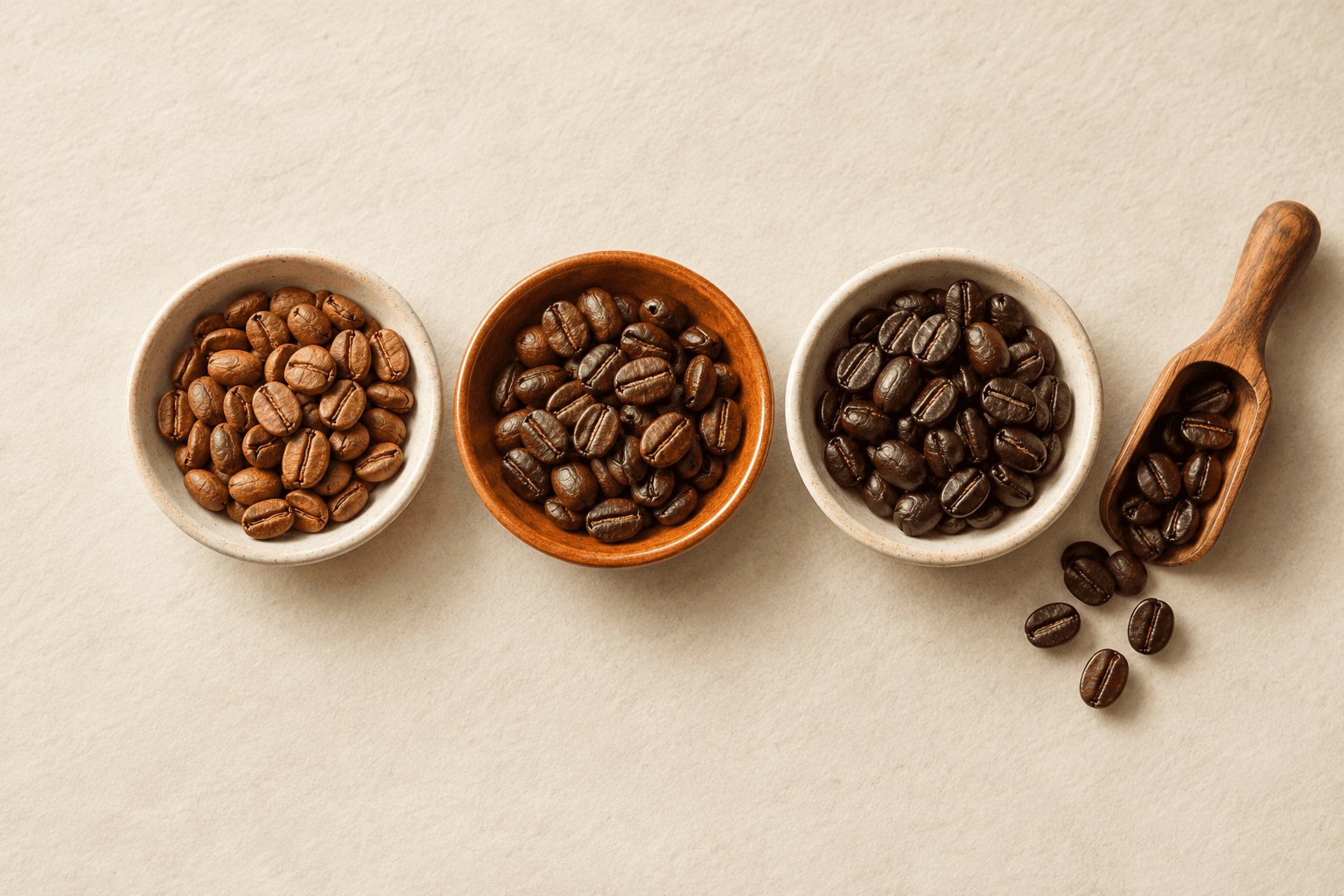
What changes during roasting
Heat changes green coffee seeds into the aromatic brown beans we brew. Beans lose moisture, expand, and undergo chemical reactions that create colour and flavour. Roasters control heat and time to develop the coffee, so the final colour is only part of the story.
First crack is a popping stage as the bean structure expands under pressure. Roasters often describe roast development in relation to this stage. With further roasting, a second crack can occur as the structure breaks down further. These are useful roasting terms, but neither gives a universal temperature or tells you exactly how a retail bag will taste.
Compare light, medium, and dark
Acidity is the bright, mouth-watering sensation you might recognise in fruit. These are broad tendencies: a light roast can taste sweet and rounded, and a dark roast can retain acidity. Origin, processing, and the way the roaster applied heat all change the result. Compare coffees from the same roaster when you want a clearer sense of their labels.
| Roast | Common clues in the cup | Useful brewing approach |
|---|---|---|
| Light | More noticeable acidity; fruit or floral aromas may be clearer | Often needs more extraction to avoid a sharp, thin cup |
| Medium | A balance of brightness, sweetness, and developed nut or chocolate notes | Start with your usual recipe and adjust by taste |
| Dark | More roast flavour, often cocoa, toast, smoke, or bitterness | Often extracts readily; try gentler brewing if it tastes harsh |
Colour and oil are clues
Light beans are usually lighter brown and less expanded. Darker beans tend to be deeper brown and more porous. Oil can appear on the surface of darker beans, and it may become more visible with time. Surface oil alone does not prove that a coffee is fresh, stale, good, or bad.
Terms such as city, full city, French, and Italian are traditional roast descriptions. Their meaning varies between sellers. An espresso roast is a roaster's recommendation for brewing, rather than a separate species of coffee or a promise that it must be dark. You can make espresso with a light roast and filter coffee with a dark one.
Use one filter recipe as your baseline
For a filter brewer you already know, begin with 20 g of coffee and 320 g of water at about 94 °C. This is a 1:16 coffee-to-water ratio. Keep the grinder setting and brewing routine consistent for the first cup, and note the brew time rather than chasing an exact finish time.
Calculate the ratio by dividing water weight by coffee weight. The calculator starts at 20 g and 320 g; change both amounts together if you want to scale the brew without changing the ratio. A fixed ratio helps you compare roast levels, but does not guarantee equal strength or extraction.
Try it: brew ratio
See how strong your recipe really is
Ratio
1:16
Coffee share
5.9 %
Closest common recipe: V60 pour-over at 1:16.
Adjust light roasts when they taste sharp
Lighter roasts often resist extraction more than darker ones. Extraction means dissolving flavour compounds from the grounds into the water. If your light roast tastes sour and thin, try a small grind adjustment finer, keeping the water amount and temperature steady.
If the finer grind makes the filter drain poorly, return to the previous setting and try slightly hotter water instead. A bright sensation alongside sweetness may belong to the coffee. Keep tasting as it cools rather than trying to remove every trace of acidity.
Adjust dark roasts when they taste harsh
Darker roasts usually extract more readily. If a familiar recipe tastes bitter or drying, try a slightly coarser grind first. If the cup still feels harsh, keep the grind steady on the following brew and lower the water temperature a little.
Ashy or smoky flavours may come from the roast itself, so a brewing change has limits. Check for stale oils in the grinder and brewer before blaming the bag. If the cup becomes thin before the roast flavour feels pleasant, a different coffee may suit you better.
Separate strength from roast level
A dark roast may taste intense because of its bitterness or aroma, but drink strength is about the concentration of dissolved coffee in the cup. A lightly roasted coffee brewed with less water can be stronger than a dark roast brewed with more water.
Roast colour is also a poor way to choose caffeine content. Species, dose, and brewing affect the caffeine in a cup. A scoop of dark beans and a scoop of light beans can weigh differently, so compare doses by weight. If reducing caffeine is the aim, choose decaf rather than relying on roast level.
Compare the cups before picking a favourite
Brew the two coffees with the same method, water, dose, ratio, and starting routine. Taste them at similar temperatures and note sweetness, acidity, body, and finish. Body is how heavy or light the drink feels in your mouth. Try them with the same amount of milk if that is how you normally drink coffee.
An identical recipe compares how the coffees behave under the same conditions. It does not find the best recipe for each one. After that first comparison, adjust each coffee separately and record the changes. If the beans also differ in origin or process, those differences contribute to what you taste.
Record the roast and the useful adjustment
Save the roaster's roast description with the bean in Roastbook, then record the gear, dose, water, temperature, grind, and tasting note for each brew. Keep your own description of the cup alongside the label.
When you revisit the bag, compare the first recipe with the adjusted one. "Slightly coarser, less drying" helps you repeat the improvement. Over several bags, your history can show which roast styles you enjoy with each brewer without assuming that one label means the same thing everywhere.